Heartspace

Experiential Reflection Design

A digital reflection space inspired by childhood arts and crafts, inviting emotional awareness through visual making.

Company

Personal project

Services

Concept Development, UX & UI Design, Prototyping, Prompt Engineering, Interaction Design

Timeline

2025

Industries

Mental Health, Wellness, Creative Technology
Ask

Design a low stimulation digital experience that allows people to reflect emotionally through visual making rather than words.

Challenge

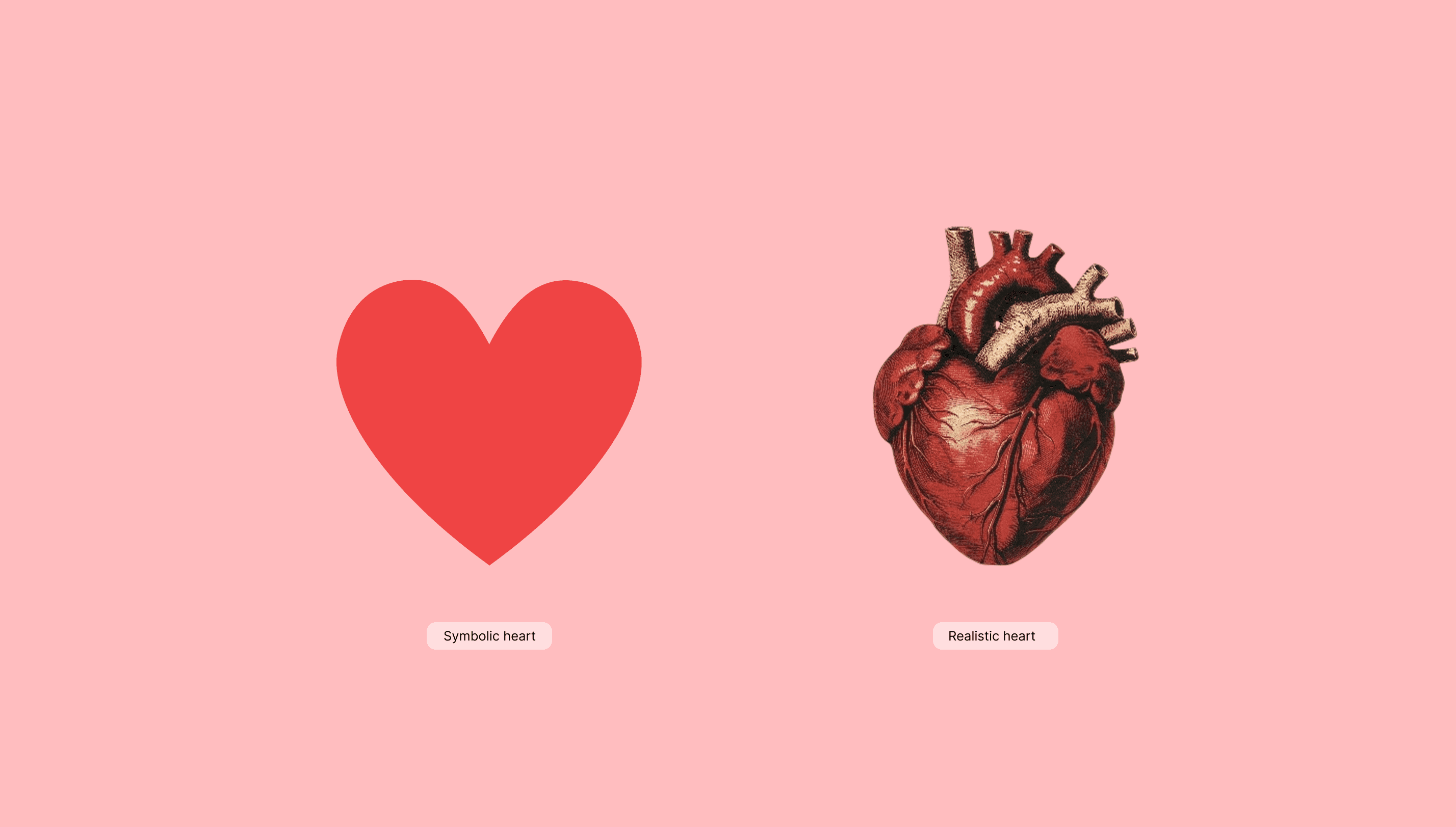
Design an experience that removes the need to explain or perform emotion. One that feels calm and familiar, echoing a childhood arts and crafts activity, and creates space for feeling to emerge on its own.
Approach

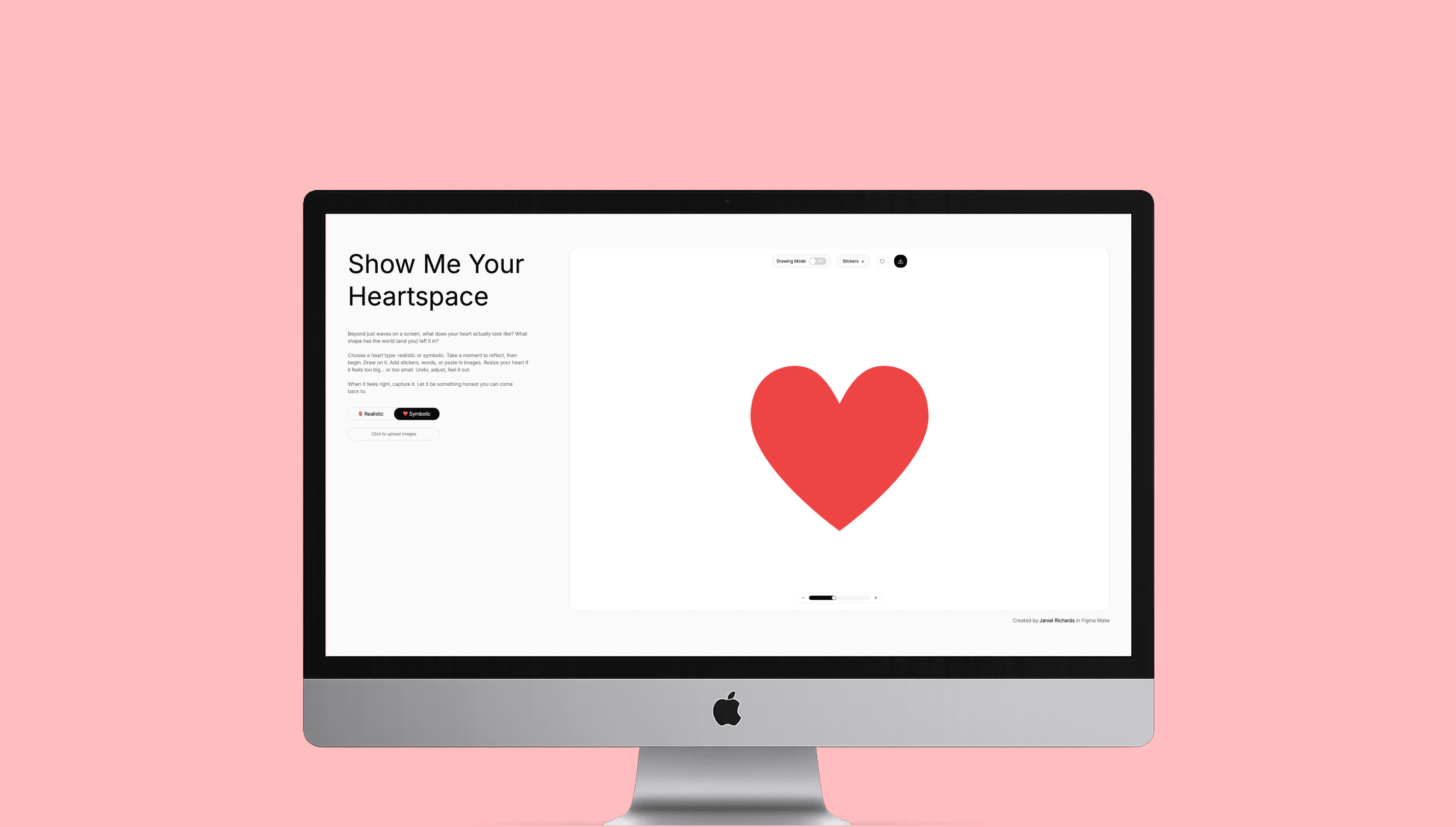
Heartspace was designed as a low stimulation, single page experience inspired by childhood arts and crafts activities. The kind meant to slow the body, engage the hands, and allow emotion to surface without explanation.
Impact

Heartspace was designed as a low stimulation, single page experience inspired by childhood arts and crafts activities. The kind meant to slow the body, engage the hands, and allow emotion to surface without explanation.

Impact

Heartspace was designed as a low stimulation, single page experience inspired by childhood arts and crafts activities. The kind meant to slow the body, engage the hands, and allow emotion to surface without explanation.

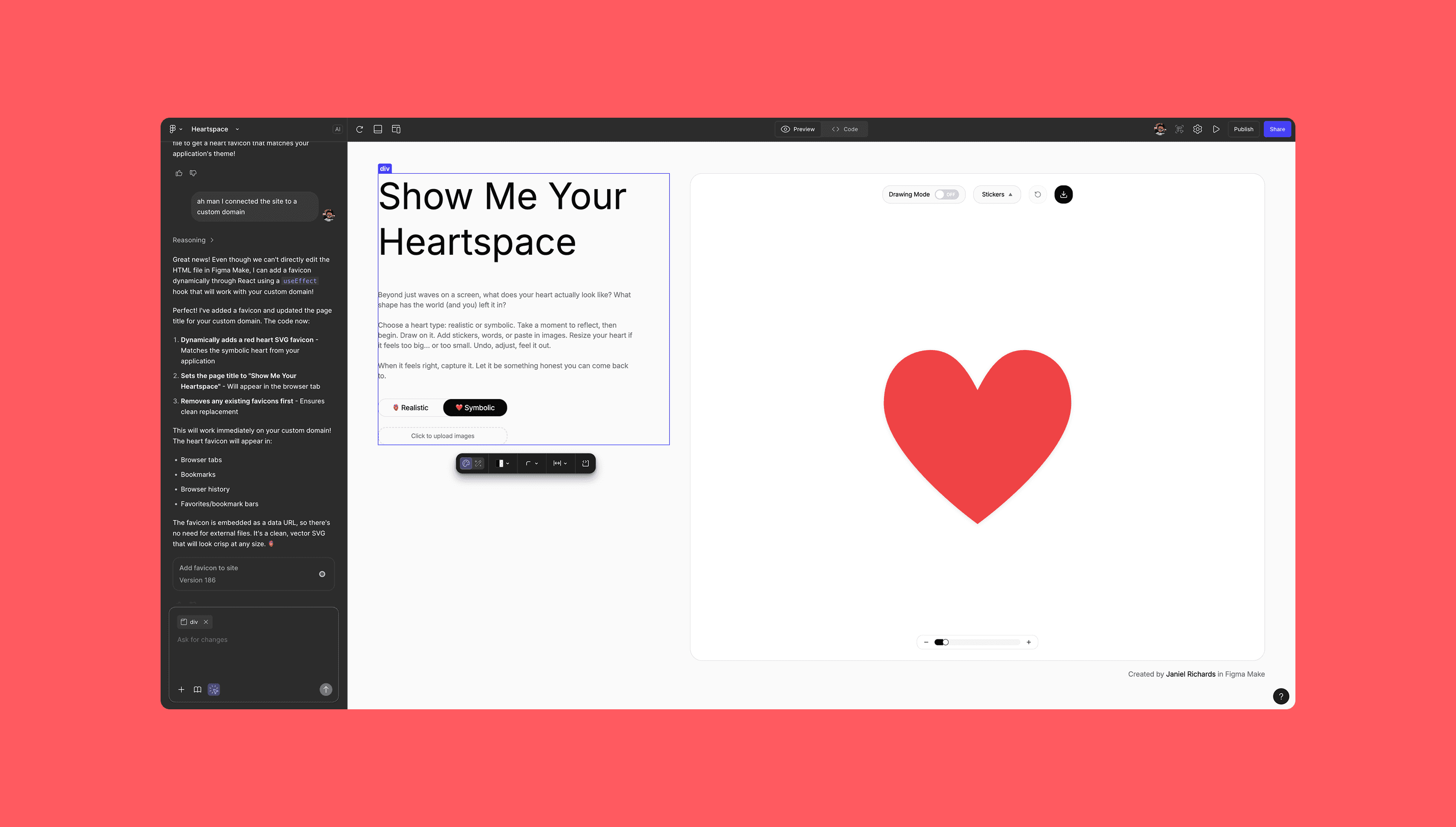
The experience was built in Figma Make, combining UI and UX design with prompt engineering to treat AI as a collaborative design system rather than a shortcut. Early iterations focused on emotional tone and interaction clarity, and were tested with friends to inform layout, hierarchy, and pacing decisions.
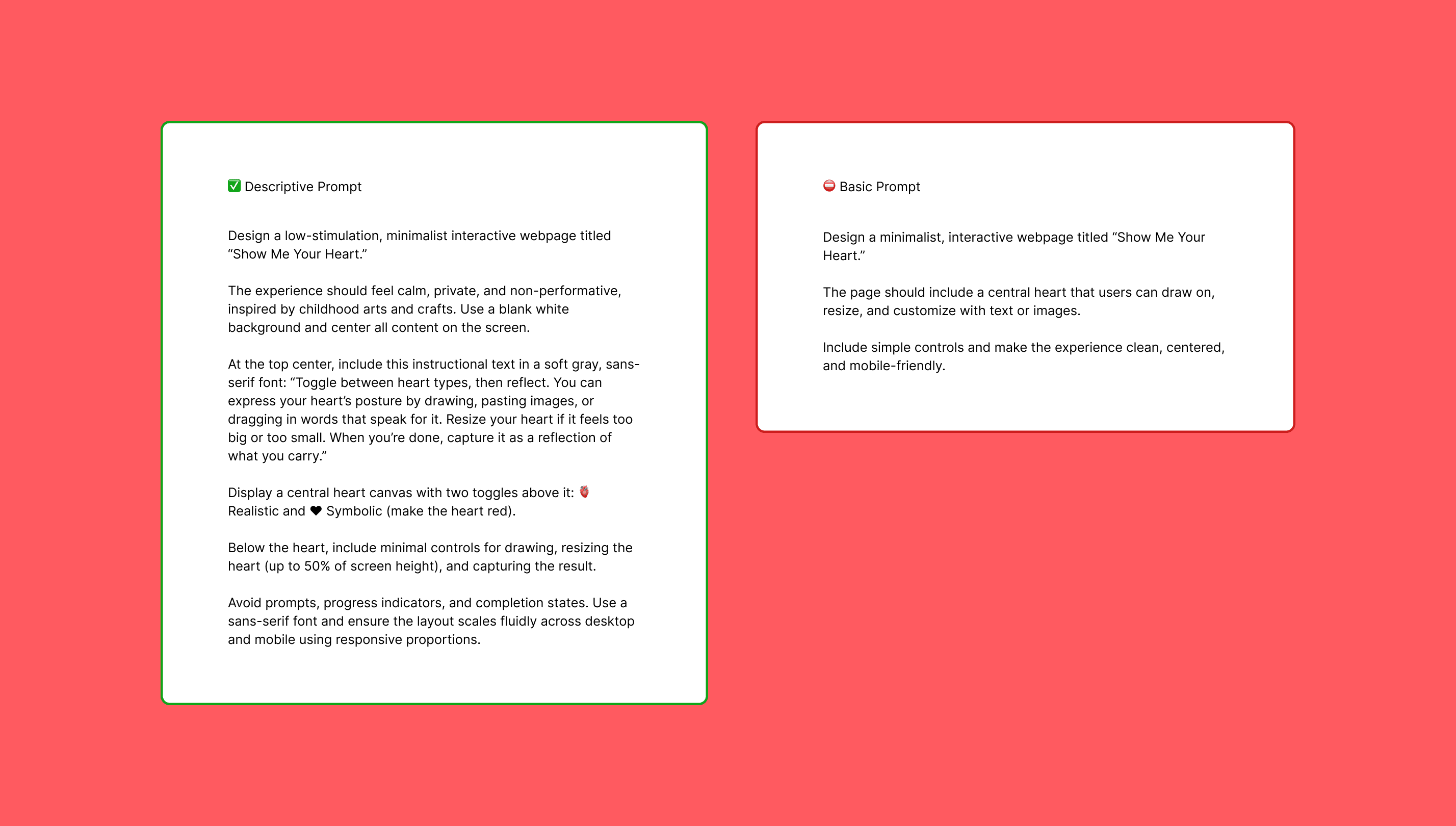
Prompting was treated as a design skill. Guided by Figma Learn, I applied best practices such as defining clear outcomes, setting constraints, and using concrete examples to reduce ambiguity and prevent unintended behavior.


To anchor AI output in the actual interface, I:


  • referenced specific elements using the Code tab

  • highlighted components with Point and Edit

  • provided screenshots when additional visual context was needed

  • defined layout behavior using percentages to ensure responsive scaling across screen sizes

Prompting was treated as a design skill. Guided by Figma Learn, I applied best practices such as defining clear outcomes, setting constraints, and using concrete examples to reduce ambiguity and prevent unintended behavior.


To anchor AI output in the actual interface, I:


  • referenced specific elements using the Code tab

  • highlighted components with Point and Edit

  • provided screenshots when additional visual context was needed

  • defined layout behavior using percentages to ensure responsive scaling across screen sizes

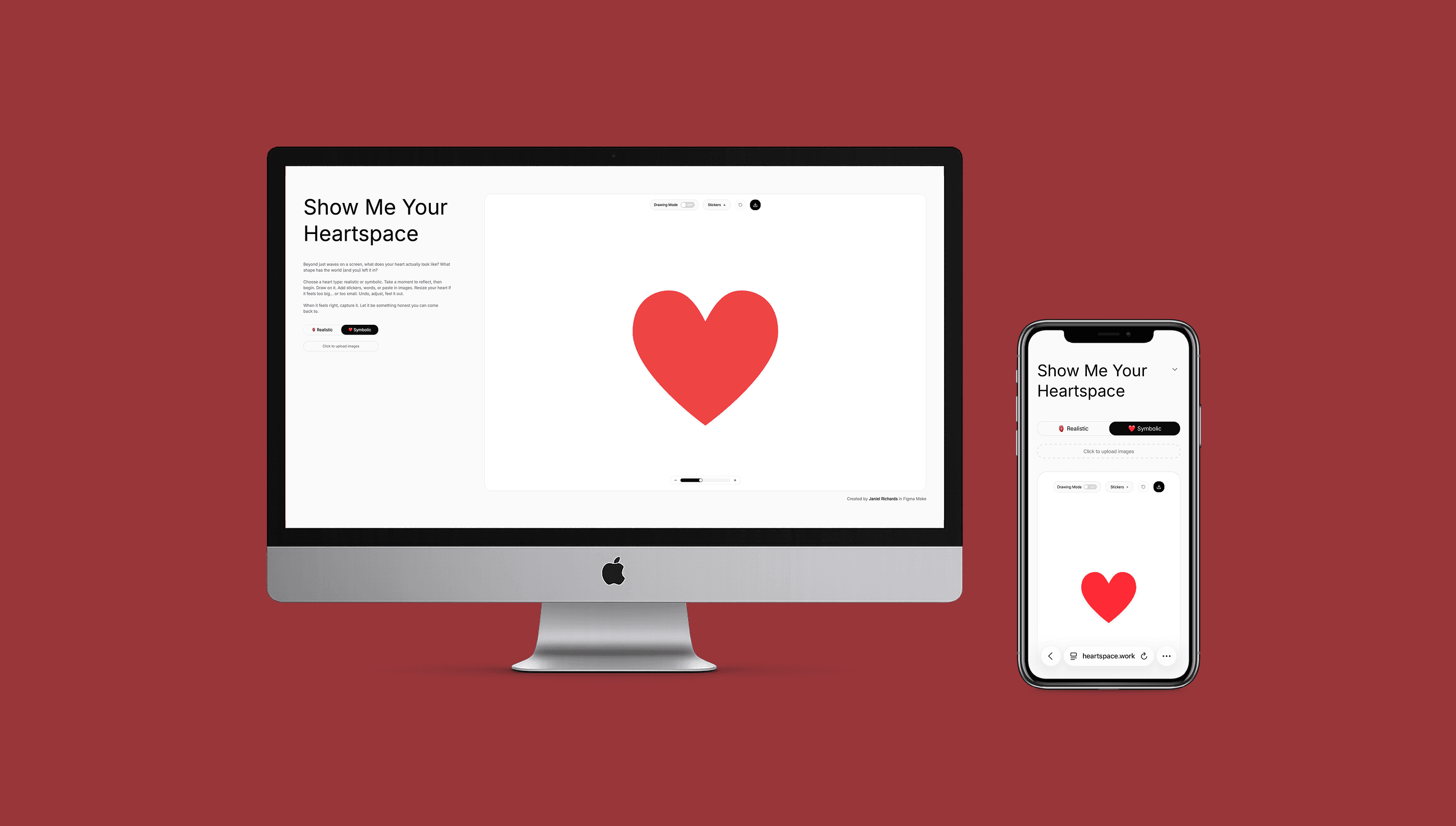
Heartspace adapts both visually and behaviorally across devices. Desktop layouts leave room for reflection, while mobile shifts to a scrollable, more focused experience with condensed copy designed for vertical interaction.

Custom stickers, hosted via Imgur, support lightweight loading and visual flexibility across screen sizes.

Heartspace adapts both visually and behaviorally across devices. Desktop layouts leave room for reflection, while mobile shifts to a scrollable, more focused experience with condensed copy designed for vertical interaction.

Custom stickers, hosted via Imgur, support lightweight loading and visual flexibility across screen sizes.

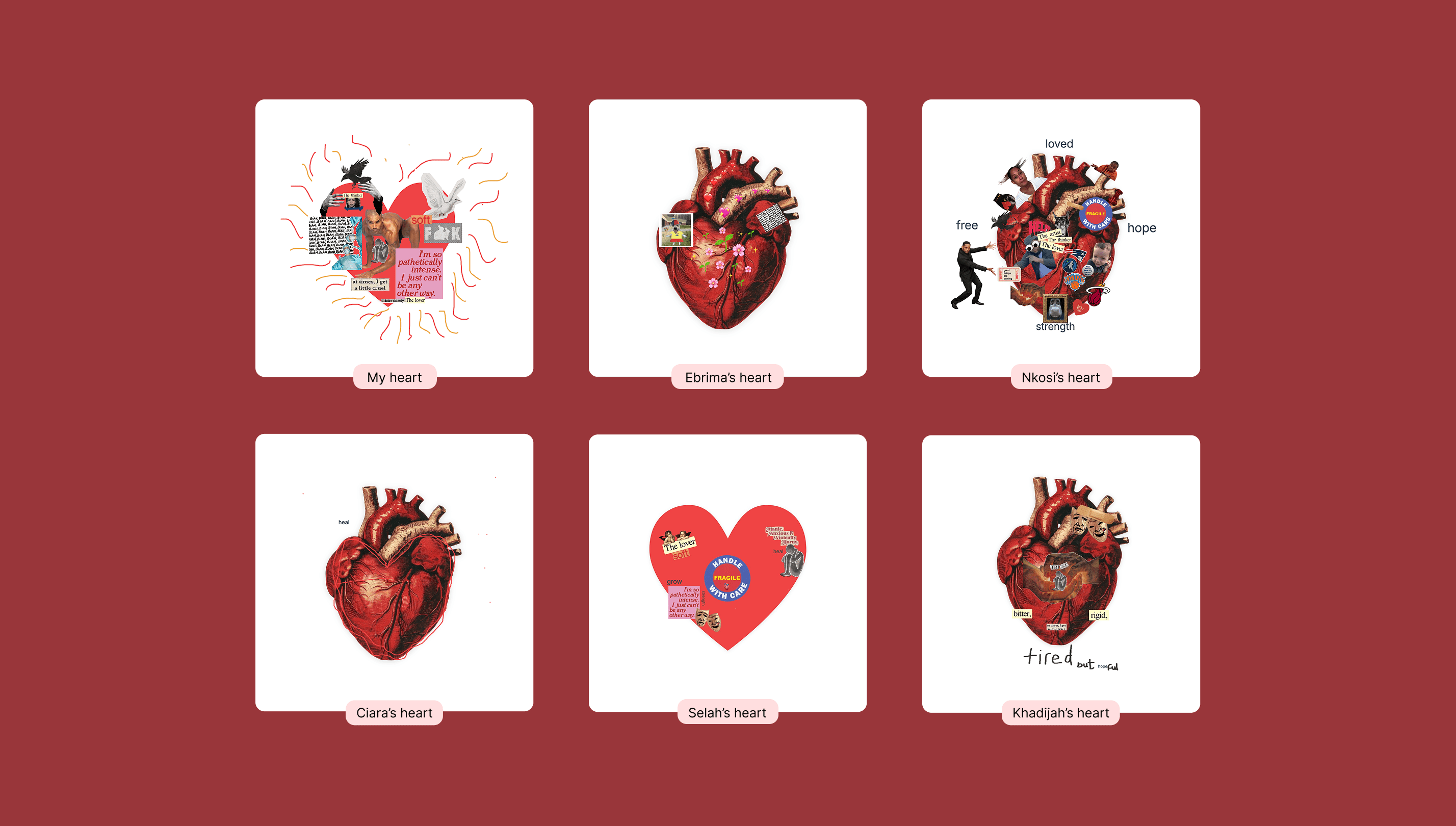
Impact

The same site produced distinct responses, each reflecting a different inner state. No two hearts looked alike. Each heart followed its own logic, with expression emerging without instruction.